Fukui had the fewest nights by guests from outside Japan in 2025, 108,550, followed by Shimane, Kochi, Akita and Yamaguchi. Tokyo alone had 33.4% of Japan's 179,922,130 foreign guest nights. Compared with the number of residents, Saitama had the fewest and Kyoto the most.
Which prefectures get the fewest foreign visitors?
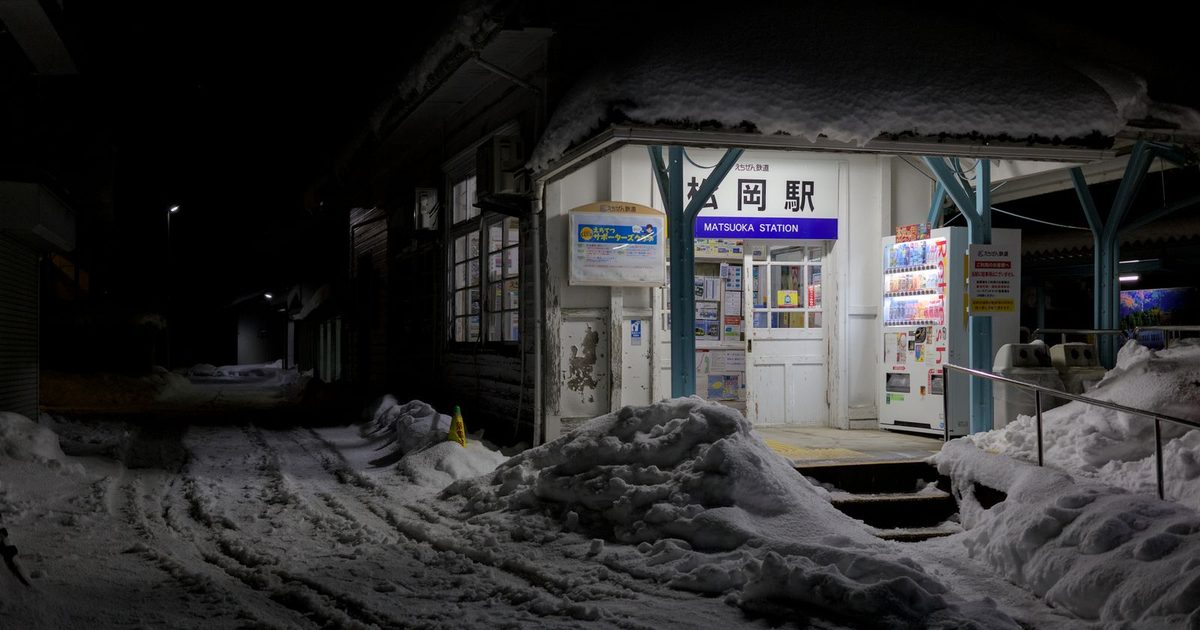
Counted by nights spent in hotels, ryokan and other places to stay, Fukui had the fewest guests from outside Japan in 2025: 108,550 nights, or 0.06% of the national total. Next came Shimane (114,300), Kochi (140,780), Akita (148,340) and Yamaguchi (162,210).1
At the other end, Tokyo had 60,115,730 foreign guest nights, 33.4% of Japan's total. The ten prefectures with the fewest shared 1.1% between them.1
The survey is a sample, so each figure has a margin of error. Fukui and Shimane are closer together than their standard errors, so treat their order as uncertain. The same applies to Kochi and Akita and to Saga, Miyazaki and Saitama, among the ten lowest.2
Which prefectures have the fewest foreign visitors for their size?
A small prefecture will have fewer visitors simply because it is small, so we also divided each prefecture's foreign guest nights by the number of people who live there, from the 2025 census. On that measure Saitama had the fewest, 0.04 foreign guest nights per resident, followed by Ibaraki (0.11) and Yamaguchi (0.13).1,3
Kyoto had the most, 7.31 per resident, then Okinawa (6.27) and Tokyo (4.22).1,3
| Rank | Prefecture | Foreign guest nights per resident | Foreign guest nights | Residents (2025 census) |
|---|---|---|---|---|
| 1 | Saitama | 0.04 | 280,350 | 7,287,169 |
| 2 | Ibaraki | 0.11 | 312,000 | 2,791,207 |
| 3 | Yamaguchi | 0.13 | 162,210 | 1,264,006 |
| 4 | Fukui | 0.15 | 108,550 | 729,386 |
| 5 | Akita | 0.17 | 148,340 | 882,100 |
| 6 | Shimane | 0.18 | 114,300 | 629,460 |
| 7 | Gunma | 0.19 | 360,270 | 1,867,582 |
| 8 | Fukushima | 0.21 | 359,730 | 1,711,937 |
| 9 | Kochi | 0.22 | 140,780 | 643,437 |
| 10 | Shiga | 0.22 | 307,990 | 1,392,439 |
Is Ishikawa, the prefecture Kanazawa is in, quieter than Kyoto?
At prefecture level, Ishikawa had 2,142,820 foreign guest nights in 2025 against Kyoto prefecture's 18,291,230, and 1.97 per resident against 7.31.1,3 These are whole prefectures, not the two cities, so they cannot show how busy a particular street or temple is.
All 47 prefectures, fewest foreign guest nights first
| Rank | Prefecture | Foreign guest nights, 2025 | Share of Japan | Per resident | Quietest month for foreign guests | Standard error |
|---|---|---|---|---|---|---|
| 1 | Fukui 福井県 | 108,550 | 0.06% | 0.15 | August | 7.8% |
| 2 | Shimane 島根県 | 114,300 | 0.06% | 0.18 | February | 4.4% |
| 3 | Kochi 高知県 | 140,780 | 0.08% | 0.22 | August | 3.1% |
| 4 | Akita 秋田県 | 148,340 | 0.08% | 0.17 | September | 3.3% |
| 5 | Yamaguchi 山口県 | 162,210 | 0.09% | 0.13 | August | 3.1% |
| 6 | Tottori 鳥取県 | 203,600 | 0.11% | 0.39 | February | 4.4% |
| 7 | Tokushima 徳島県 | 230,080 | 0.13% | 0.34 | February | 3.4% |
| 8 | Saga 佐賀県 | 251,600 | 0.14% | 0.32 | August | 4.8% |
| 9 | Miyazaki 宮崎県 | 263,050 | 0.15% | 0.26 | September | 5.3% |
| 10 | Saitama 埼玉県 | 280,350 | 0.16% | 0.04 | July | 4.5% |
| 11 | Shiga 滋賀県 | 307,990 | 0.17% | 0.22 | September | 4.9% |
| 12 | Ibaraki 茨城県 | 312,000 | 0.17% | 0.11 | January | 4.5% |
| 13 | Yamagata 山形県 | 312,560 | 0.17% | 0.31 | August | 5.0% |
| 14 | Fukushima 福島県 | 359,730 | 0.20% | 0.21 | July | 4.4% |
| 15 | Gunma 群馬県 | 360,270 | 0.20% | 0.19 | August | 3.8% |
| 16 | Mie 三重県 | 380,310 | 0.21% | 0.22 | February | 3.4% |
| 17 | Toyama 富山県 | 386,900 | 0.22% | 0.39 | March | 4.9% |
| 18 | Iwate 岩手県 | 449,750 | 0.25% | 0.40 | May | 4.7% |
| 19 | Tochigi 栃木県 | 475,800 | 0.26% | 0.26 | August | 3.9% |
| 20 | Nara 奈良県 | 520,130 | 0.29% | 0.41 | February | 3.0% |
| 21 | Aomori 青森県 | 542,880 | 0.30% | 0.48 | March | 2.6% |
| 22 | Ehime 愛媛県 | 580,850 | 0.32% | 0.46 | August | 4.0% |
| 23 | Okayama 岡山県 | 678,870 | 0.38% | 0.38 | February | 4.4% |
| 24 | Kagoshima 鹿児島県 | 708,960 | 0.39% | 0.47 | August | 3.4% |
| 25 | Nagasaki 長崎県 | 764,760 | 0.43% | 0.62 | August | 4.3% |
| 26 | Niigata 新潟県 | 848,870 | 0.47% | 0.41 | May | 6.9% |
| 27 | Wakayama 和歌山県 | 877,270 | 0.49% | 1.02 | February | 3.7% |
| 28 | Miyagi 宮城県 | 1,005,110 | 0.56% | 0.45 | June | 2.5% |
| 29 | Kagawa 香川県 | 1,127,070 | 0.63% | 1.24 | July | 3.0% |
| 30 | Oita 大分県 | 1,491,590 | 0.83% | 1.39 | September | 3.2% |
| 31 | Kumamoto 熊本県 | 1,762,050 | 0.98% | 1.05 | July | 3.5% |
| 32 | Hyogo 兵庫県 | 1,991,650 | 1.1% | 0.37 | February | 3.2% |
| 33 | Gifu 岐阜県 | 2,004,510 | 1.1% | 1.06 | June | 4.8% |
| 34 | Hiroshima 広島県 | 2,115,650 | 1.2% | 0.79 | February | 3.2% |
| 35 | Ishikawa 石川県 | 2,142,820 | 1.2% | 1.97 | July | 3.2% |
| 36 | Shizuoka 静岡県 | 2,228,930 | 1.2% | 0.64 | January | 2.6% |
| 37 | Nagano 長野県 | 2,508,350 | 1.4% | 1.28 | August | 4.1% |
| 38 | Yamanashi 山梨県 | 2,750,510 | 1.5% | 3.53 | September | 4.6% |
| 39 | Chiba 千葉県 | 4,375,880 | 2.4% | 0.70 | November | 2.5% |
| 40 | Aichi 愛知県 | 4,859,630 | 2.7% | 0.65 | September | 2.3% |
| 41 | Kanagawa 神奈川県 | 4,927,440 | 2.7% | 0.54 | February | 4.4% |
| 42 | Fukuoka 福岡県 | 8,421,130 | 4.7% | 1.66 | July | 2.6% |
| 43 | Okinawa 沖縄県 | 9,211,700 | 5.1% | 6.27 | December | 5.6% |
| 44 | Hokkaido 北海道 | 13,302,640 | 7.4% | 2.67 | April | 1.9% |
| 45 | Kyoto 京都府 | 18,291,230 | 10.2% | 7.31 | February | 1.8% |
| 46 | Osaka 大阪府 | 24,517,740 | 13.6% | 2.80 | September | 1.6% |
| 47 | Tokyo 東京都 | 60,115,730 | 33.4% | 4.22 | February | 1.4% |
Rank 1 has the fewest nights. “Standard error” is the Japan Tourism Agency's published standard error rate for each prefecture's foreign-guest figure.2 Each prefecture name links to its month-by-month page.
Counting Japanese guests too
Including guests who live in Japan, Saga had the fewest guest nights of any prefecture in 2025, 2,356,860, out of 661,105,480 nationally.1
What these figures cannot tell you
- Day visitors are not counted. The survey counts nights in places to stay, so a prefecture full of day-trippers can still look quiet.2
- A prefecture is not a town. A busy spot can sit inside a quiet prefecture, and the other way round.
- Few visitors does not mean worth visiting, or not. We have not been to these places and make no judgement about them.
- Guests are counted by where they live. A foreign guest is someone living outside Japan, not a foreign national living in Japan.2
Key takeaways
- Fukui, Shimane, Kochi, Akita and Yamaguchi had the fewest foreign guest nights in 2025.
- Tokyo alone had 33.4% of Japan's foreign guest nights.
- For their number of residents, Saitama, Ibaraki and Yamaguchi had the fewest foreign guest nights, and Kyoto the most.
- Kyoto prefecture had 8.5 times as many foreign guest nights as Ishikawa in 2025.
- What we would skip: treating a one- or two-place gap as exact. The figures come from a sample survey.
Sources
The guest-night figures come from the Japan Tourism Agency and the population figures from the Statistics Bureau of Japan, both Japanese government bodies. We downloaded the data directly and did the division and ranking ourselves. See how we research.
- Source: 「宿泊旅行統計調査」(観光庁) (Overnight Travel Statistics Survey, Japan Tourism Agency), 2025 annual figures (final), table 2, published 6 July 2026. Survey page · Workbook. Accessed 17 September 2026. National totals checked against the agency's press release (6億6,111万人泊 in total; 1億7,992万人泊 by foreign guests).
- Japan Tourism Agency, survey outline (調査の概要), glossary (用語の解説) and standard error rates (参考1), on coverage, sampling and the definition of a foreign guest. Read them. Checked 17 September 2026.
- Population: 出典:「令和7年国勢調査 人口速報集計」(総務省統計局), 第1表, population on 1 October 2025 (Statistics Bureau of Japan, 2025 Population Census, preliminary counts). e-Stat. Accessed 23 September 2026. Licensed under the Public Data License 1.0.
Edited data. 「宿泊旅行統計調査」(観光庁)を加工して作成; 「令和7年国勢調査 人口速報集計」(総務省統計局)を加工して作成 — created by Gallivanting Gadabout by editing the two agencies' data. The shares, per-resident figures and rankings are our own calculations and are not official figures. Figures per resident are rounded to two decimal places, and shares to one (two below 1%).